To see which conversions have been influenced by Pathmonk, navigate to Analytics → Conversions. Then, locate the Group column. This indicates whether the visitor who converted belonged to the Pathmonk group (exposed to microexperiences) or the control group (not exposed).
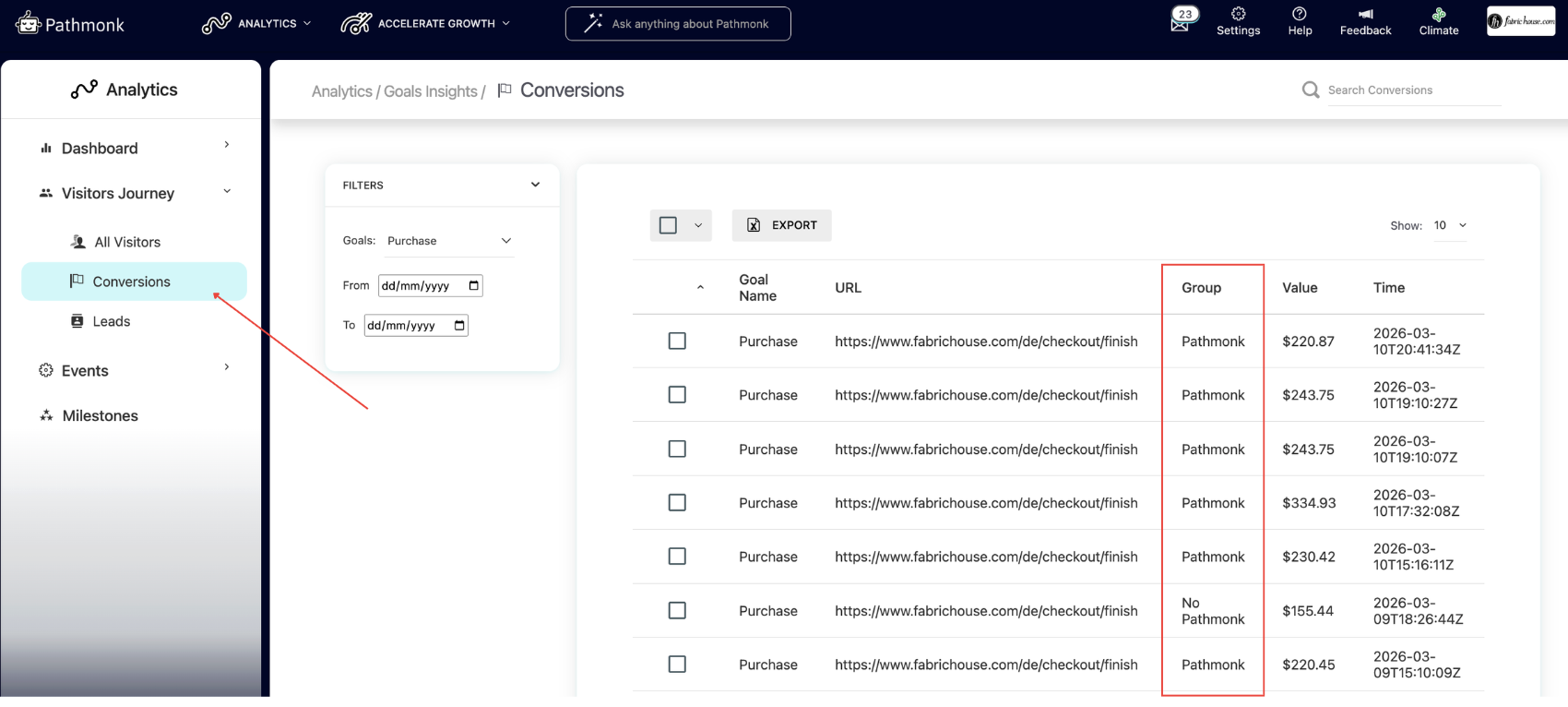
There are three possible group labels:
- Pathmonk exposed: These visitors belong to the Pathmonk experiment group. This means they are eligible to be served Pathmonk microexperiences during their visit.
- Control group: These visitors belong to the control group and will not be served Pathmonk experiences. This group is used as the baseline to compare results.
- No group defined: This appears when a visitor cannot be assigned to either group. This usually happens when the visitor’s first visit occurred before Pathmonk was published on the website, so the system cannot retroactively assign them to an experiment group. In rarer cases, it can also happen when the system cannot reliably identify the visitor (for example, when traffic appears to come from bots or the fingerprint cannot be confidently determined). It could also indicate that something is broken in your setup. If you see multiple conversions identified as 'No group defined' please contact support@pathmonk.com so we can investigate what's happening.
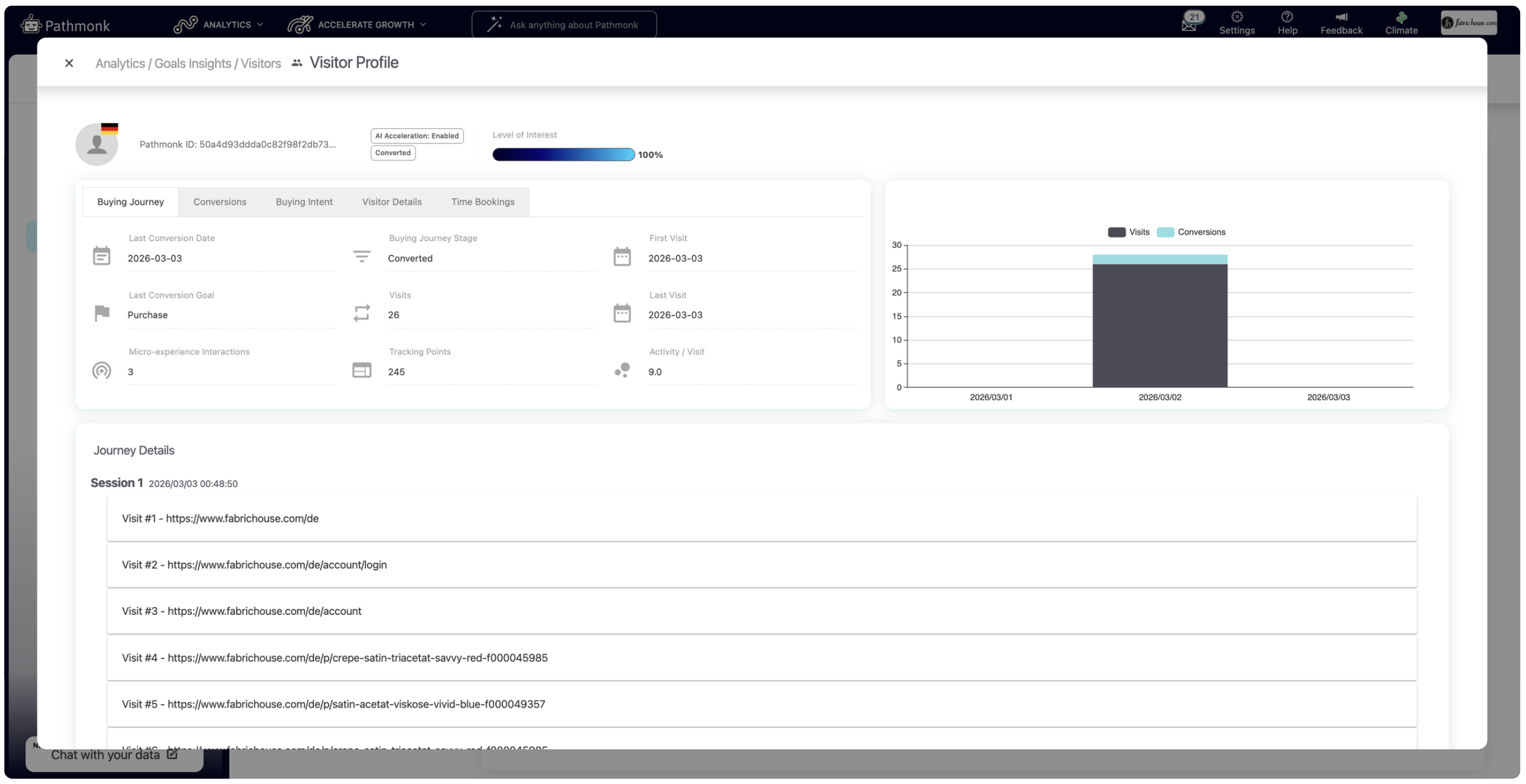
Clicking on a conversion also allows you to review additional details such as the conversion journey details, the amount of visits, and other relevant data.
If you would like to identify whether a specific conversion was influenced by Pathmonk within your CRM or analytics platform, we can help you set this up.
Please contact our team at support@pathmonk.com. We will review how your data layer is structured and define the correct implementation so Pathmonk and your other platforms can communicate properly and display the conversion data accurately.
Was this article helpful?
That’s Great!
Thank you for your feedback
Sorry! We couldn't be helpful
Thank you for your feedback
Feedback sent
We appreciate your effort and will try to fix the article